

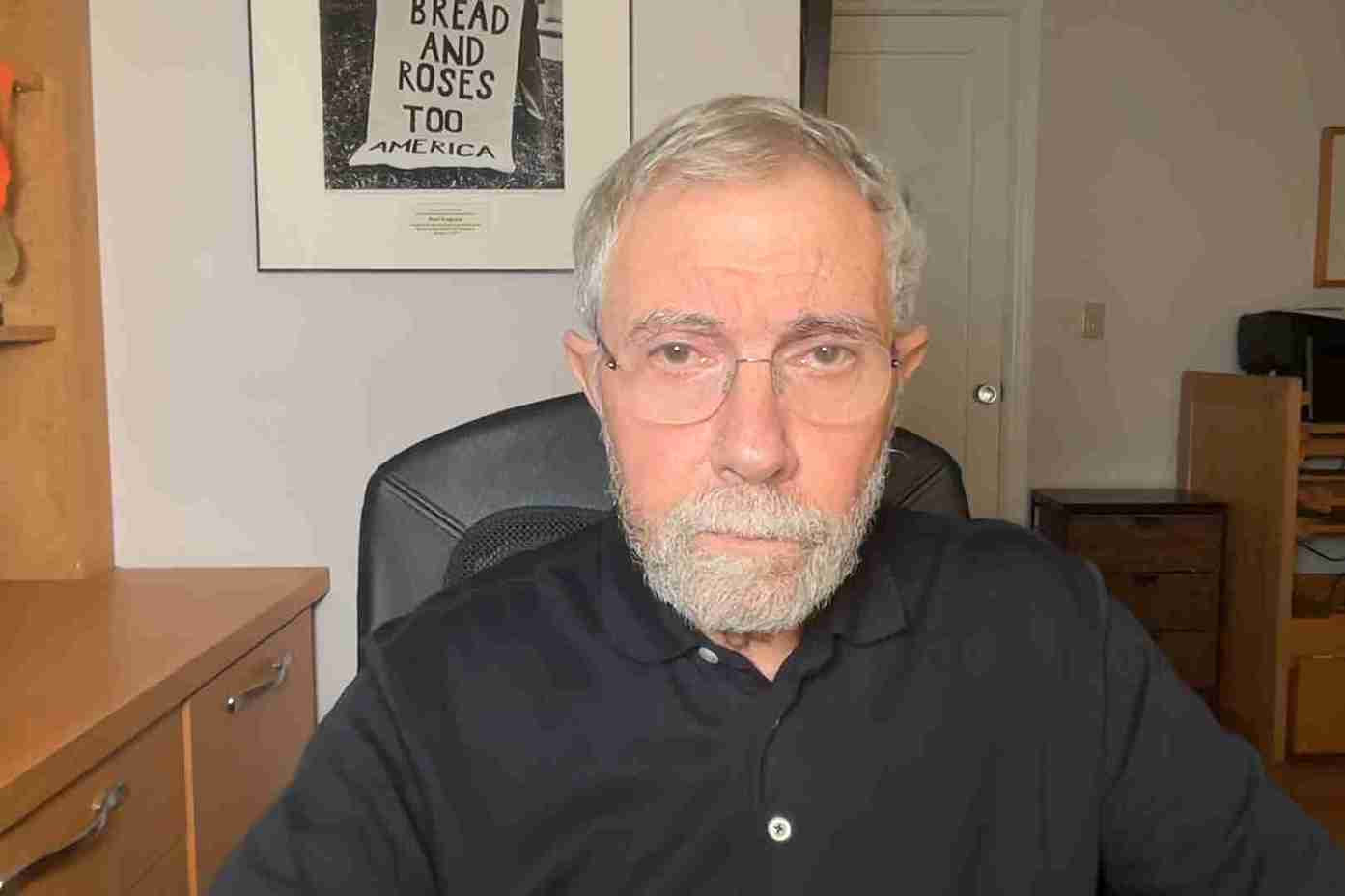
Paul Krugman is an American economist, columnist, and author best known for his work on international trade, economic geography, and macroeconomics. Born in 1953, he has built a career that blends academic research, public policy analysis, and journalism. Recognized for his clarity, sharp analysis, and ability to explain complex economic issues, Krugman has become one of the most respected voices in global economics. As of 2026, he continues to serve as a professor at the City University of New York and as a columnist for The New York Times, shaping international conversations on economics, politics, and society.
Paul Krugman – Summary Table
| Attribute | Details |
|---|---|
| Full Name | Paul Robin Krugman |
| Date of Birth | February 28, 1953 |
| Age (2026) | 73 years |
| Birthplace | Albany, New York, USA |
| Nationality | American |
| Height | 5′8″ (1.73 m) |
| Occupations | Economist, Professor, Columnist, Author |
| Years Active | 1970s – present |
| Education | Yale University (B.A., 1974); MIT (Ph.D., 1977) |
| Career Highlights | Professor at MIT, Princeton University, London School of Economics, and City University of New York; columnist for The New York Times (1999–2024); chief staffer for international economics at Reagan’s Council of Economic Advisers (1982–83) |
| Notable Contributions | Developed New Trade Theory and New Economic Geography; influential work on liquidity traps and currency crises |
| Books | The Great Unraveling (2003); The Conscience of a Liberal (2007); End This Depression Now! (2012); over 20 books published |
| Awards/Recognition | John Bates Clark Medal (1991); Princess of Asturias Award (2004); Nobel Memorial Prize in Economic Sciences (2008) |
| Family | Married to economist Robin Wells (1996–present) |
| Net Worth (est.) | $5–10 million (approx.) |
| Current Status | Distinguished Professor of Economics at the Graduate Center, City University of New York; active writer and commentator |
Early Life and Family Background
- Full Name: Paul Robin Krugman
- Date of Birth: February 28, 1953
- Place of Birth: Albany, New York, USA
- Nationality: American
- Education: Yale University (B.A. in Economics, 1974); Massachusetts Institute of Technology (Ph.D. in Economics, 1977)
Krugman grew up in New York in a family that valued education and intellectual curiosity. His upbringing instilled resilience, discipline, and a strong sense of civic responsibility. He pursued economics at Yale and MIT, reflecting his interest in global trade and policy.
Academic Career Beginnings
Paul Krugman began his career in academia.
- Served as an assistant professor at Yale University.
- Later taught at MIT, Stanford, and Princeton.
- Gained recognition for his groundbreaking work in international trade theory.
His early work demonstrated his dedication to rigorous analysis and innovative thinking.
Rise to Prominence
Krugman rose to international prominence in the 1980s and 1990s.
- Developed “New Trade Theory,” explaining how economies of scale and consumer preferences shape global trade.
- Advanced “New Economic Geography,” analyzing how industries cluster geographically.
- Published influential academic papers and books.
His role expanded his influence within global economic discourse.
Nobel Prize in Economics
In 2008, Paul Krugman was awarded the Nobel Memorial Prize in Economic Sciences.
- Recognized for his analysis of trade patterns and location of economic activity.
- His work reshaped understanding of globalization and regional development.
- The Nobel Prize solidified his reputation as one of the leading economists of his generation.
Journalism and Media Career
Beyond academia, Krugman has built a prominent career in journalism.
- Columnist for The New York Times since 1999.
- Known for his incisive commentary on economic policy, inequality, and globalization.
- His columns reach millions of readers worldwide.
Authorship
Paul Krugman is also an accomplished author.
- Wrote The Age of Diminished Expectations (1990).
- Published The Return of Depression Economics (1999).
- Released The Conscience of a Liberal (2007).
- Published Arguing with Zombies: Economics, Politics, and the Fight for a Better Future (2020).
- His works blend economic narrative with cultural and political analysis.
Coverage Highlights
Krugman has commented on:
- Global financial crises.
- U.S. economic policy and taxation.
- Income inequality and social justice.
- International trade and globalization.
His coverage demonstrates a commitment to factual reporting and balanced analysis.
Awards and Recognition
- Nobel Memorial Prize in Economic Sciences (2008).
- John Bates Clark Medal (1991).
- Recognition from academic and journalism organizations for excellence in analysis.
- Invitations to speak at conferences and universities worldwide.
Personal Life
Paul Krugman married Robin Wells, an economist and co‑author of several textbooks.
- Resides in New York City.
- Known for balancing academic life with public engagement.
Philanthropy and Advocacy
Krugman supports initiatives related to education, civic engagement, and economic justice. He has participated in programs encouraging accountability and emphasizes the importance of resilience and authenticity in public discourse.
Net Worth (2026)
| Source of Income | Estimated Contribution |
|---|---|
| Academic Career | $3 million |
| Journalism | $5 million |
| Book Sales | $4 million |
| Speaking Engagements | $3 million |
| Investments | $5 million |
| Total Net Worth (2026) | ≈ $20 million |
Legacy and Influence
Paul Krugman’s legacy lies in his ability to critique power and inspire audiences with his clarity. He represents a generation of economists who combine professional expertise with personal courage. His influence extends beyond academia, shaping conversations in politics, culture, and society. As of 2026, he remains a prominent figure in global economics.
Conclusion
From academic researcher to Nobel Prize laureate and public intellectual, Paul Krugman’s biography reflects a journey of ambition, resilience, and influence. His work across economics, journalism, authorship, and public speaking demonstrates his versatility and vision. In 2026, he continues to inspire audiences with his authenticity, professionalism, and leadership.
FAQ
1. Who is Paul Krugman?
Paul Krugman is an American economist, professor, author, and columnist known for his work in international economics and trade theory. He is also a long-time columnist for The New York Times.
2. Why is Paul Krugman famous?
Paul Krugman is famous for his contributions to International Economics, particularly his work on trade patterns and economic geography, as well as his influential opinion columns on global economic issues.
3. Did Paul Krugman win a Nobel Prize?
Yes, Paul Krugman won the Nobel Memorial Prize in Economic Sciences in 2008 for his work on trade theory and economic geography.
4. What is Paul Krugman’s net worth?
Paul Krugman’s estimated net worth is believed to be between $2 million and $5 million, derived from academic positions, book sales, and journalism.
5. Where does Paul Krugman teach?
Paul Krugman has taught at several prestigious institutions, including Princeton University and the City University of New York, where he has been a distinguished professor.
6. What are Paul Krugman’s most popular books?
Some of Paul Krugman’s well-known books include The Conscience of a Liberal, End This Depression Now!, and Arguing with Zombies.
7. What is Paul Krugman’s economic theory?
Paul Krugman is best known for developing the New Trade Theory, which explains how economies of scale and consumer preferences influence international trade patterns.
8. Is Paul Krugman a Keynesian economist?
Yes, Paul Krugman is widely considered a Keynesian economist, supporting government intervention and fiscal stimulus during economic downturns.
9. What does Paul Krugman write about?
Paul Krugman writes about global economics, public policy, inequality, trade, and political economy in his columns for The New York Times.
10. When was Paul Krugman born?
Paul Krugman was born on February 28, 1953, in the United States.
11. Where is Paul Krugman from?
Krugman was born in Albany, New York, USA, and raised in a middle-class American family.
12. What impact has Paul Krugman had on economics?
Krugman has had a major impact on modern economics through his academic research, policy commentary, and public engagement, helping shape debates on globalization, recession policy, and economic inequality.